
Our Services
Firmware Engineering
Connect hardware to its purpose. Flexible C/C++ firmware for device control, sensor data and connected products—from first prototype through platform evolution.
Discuss Your Firmware Project
Built Around Your Hardware
Close to the hardware.
Built for what comes next.
Memory limits, timing, power and physical interfaces shape every firmware decision. We connect those constraints to the behavior your product needs—not just the code that makes it run.
Landi’s firmware approach pairs Test Driven Development with hardware/software integration. The aim is flexible, portable, safe and predictable software, with lifecycle support and platform ports considered from the start.
- Clear interfaces
- Testable behavior
- Maintainable code
Firmware Services
What We Offer
Start with a new device, an existing codebase or a platform change. The scope follows the hardware, the product and the risks that need resolving.
Architecture & requirements
Translate product behavior into a modular design. Define task boundaries, timing budgets, memory use, fault handling and security requirements.
State machines · interfaces · test strategy
Implementation & drivers
Build C/C++ firmware around the board and its peripherals, with bare-metal or RTOS execution selected for the application.
I2C / SPI / UART · scheduling · board bring-up
Connectivity & device control
Connect equipment, process sensor data and integrate devices into an IoT system. Scope pairing, data exchange and encryption needs together.
CANBus · Modbus · TCPIP · wireless
Review & optimization
Examine existing code and device behavior to identify timing, memory and maintainability issues. Prioritize changes against product constraints.
Code review · digital filtering · resource use
Platform ports & migration
Separate hardware dependencies from product logic so firmware can evolve with a new board, processor or operating environment.
Hardware abstraction · platform ports · regression
Validation & lifecycle support
Use testable code and hardware-level checks to verify behavior. Plan documentation, handoff and maintenance for the next stage of the product.
TDD · integration testing · release support
Hardware + Software
Test the code.
Then test the device.
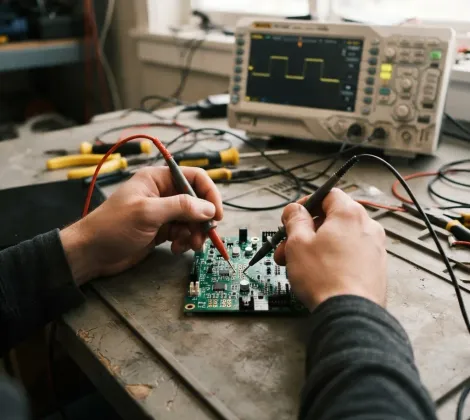
A passing unit test is only part of the picture. Bring firmware together with the target electronics to check the interfaces, timing and failure behavior that a software-only environment cannot reveal.
Behavior first
Define expected results and write tests around product logic before expanding the implementation.
Real hardware checks
Exercise sensors, buses and control outputs; review startup, power interruption and communication loss.
Evidence for handoff
Record test results, known limitations and release configuration so the next engineer can reproduce the build.
Our Process
Define. Prototype. Build. Test. Repeat.
A firmware lifecycle is not a one-way handoff. Each stage makes the next decision clearer, while testing stays connected to the hardware and the product’s intended use.
Scope, deliverables and review points are agreed for your project. No fixed timeline replaces that discussion.
Architecture
Align device behavior, hardware constraints and acceptance criteria. Choose the execution model and scope safety, encryption and access requirements.
Prototype
Test the uncertain parts early: a sensor path, a control loop or a communications link. Use the findings to refine the architecture.
Implementation
Build drivers and product logic in testable increments. Keep hardware dependencies explicit and review changes alongside their tests.
Hardware testing
Verify integrated behavior on target electronics. Check boundary conditions, timing and recovery against agreed acceptance criteria.
Production handoff
Prepare reproducible builds, release notes and integration documentation. Agree what production support and verification the project needs.
Ongoing evolution
Maintain the codebase, investigate field issues and plan changes. Carry regression coverage forward through new features and platform ports.
Documented Capabilities
Tech We Live By
Select a stack for the constraints, not the other way around. These technologies reflect Landi’s existing engineering capabilities; the right combination is established with your project team.
- Languages
- C / C++
Product logic, drivers and hardware-facing firmware.
- OS & frameworks
- Embedded Linux
- FreeRTOS · AzureRTOS · Zephyr
- QT · TouchGFX
Execution environments and embedded interfaces.
- Device interfaces
- I2C · SPI · UART
- CANBus · Modbus
Peripheral integration and equipment communication.
- Connectivity
- WiFi · Bluetooth 4.2 / LE / 5
- Ethernet · NFC · RFID · UWB
- TCPIP · AWS GreenGrass
Device networks, IoT integration and out-of-band pairing.
- Data & control
- PID: basic / adaptive / fuzzy
- DSP · digital filtering
- Statistical modeling
Sensor processing and control behavior.
- Security considerations
- Secure encryption
- Pairing and access requirements
Define data protection, update and recovery requirements during scoping.
Application Areas
Firmware in the Real World
From a single sensor to an equipment network, firmware connects physical inputs to useful behavior. These are illustrative device types—not a portfolio of delivered projects.
Industrial equipment
Motor controllers, remote equipment interfaces and connected machine sensors.
Connected devices
Sensor nodes, gateways and products that exchange data within an IoT system.
Measurement & control
Instrumentation, digitally filtered sensor signals and feedback control loops.
Embedded interfaces
On-device displays and operator controls using QT or TouchGFX.
Ways to Start
Start Where You Are
Proposed engagement options to discuss—not fixed packages. The starting point depends on what is already built and what needs to happen next.
Technical review
Understand what you have.
A focused starting point for an existing board or codebase. Discuss constraints, known issues and the questions a review should answer.
Bring: code, schematics and issue notes
Defined firmware project
Build toward a clear handoff.
Agree a bounded scope for a new implementation, device integration or platform port, with deliverables and acceptance criteria.
Bring: requirements and target hardware
Ongoing engineering support
Keep the product evolving.
Plan support around maintenance, field issues and future releases. Agree responsibilities, access and priorities with your team.
Bring: roadmap and release history
Firmware FAQ
A Few Practical Questions
The right firmware decisions begin with the right context. Here is what to consider before a project starts.
How does firmware differ from embedded software?
Firmware is the hardware-facing software that controls a device. Embedded software is a broader term that can also include operating systems, user interfaces and applications. A project may need both.
Can we start with existing hardware or code?
Yes. An initial discussion can begin with the current board, source code and known issues. Access, documentation and build reproducibility help determine whether to review, extend or port the implementation.
Do we need an RTOS?
Not always. Timing, concurrency, memory and maintenance needs guide the choice between bare-metal execution, an RTOS or Embedded Linux. Define the constraints before selecting the environment.
How should firmware be validated?
Combine tests of product logic with integration checks on the target hardware. Agree acceptance criteria and relevant failure cases early. Regulatory obligations and evidence needs must be scoped for the specific product; certification is not implied.
What happens after the first release?
Plan maintenance, issue triage, release documentation and regression testing as part of the handoff. Ongoing support and future platform ports can then be agreed around the product roadmap.
What should we bring to a first discussion?
Share the product’s purpose, hardware status, current codebase, interfaces and the main technical risks. Include security, safety or regulatory requirements and any constraints on access to hardware or source code.
Case Studies
Firmware in the field

Consumer beverage startup
Simulated Whiskey Aging Device
Countertop prototypes that evaluate form-factor aesthetics and end-user practicality, coupling reliability with ease of use while retaining the rich flavors of traditionally aged whiskeys.
Private customer, Texas
Secure, Smart, and Stylish Protective Carry for Outdoor Family Adventures
A secure, discreet way for a Texas customer to keep a firearm nearby while canoeing, grilling on the dock, or relaxing in the cabin, yet completely inaccessible to children and unauthorized users.
City University of New York
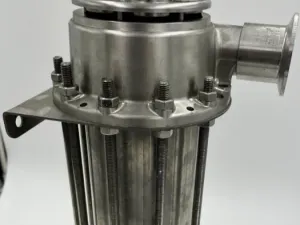
Pioneering Water Sterilization Technology
Harnessing pulsed UV-C radiation, a CUNY research team moved microbial inactivation from meat-processing conveyors into a 60 GPM water-sterilization system for crisis-zone use.
Celebrity dog trainer, California
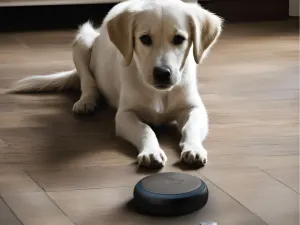
Revolutionizing Dog-Human Communication in the Pet Training Industry
A connected training device and companion app for a renowned California dog trainer that translates a dog’s intent into spoken phrases and remote text alerts, built to CPSIA and Proposition 65 material standards.
Tell us what your
device needs to do.
New hardware, an existing product or a platform change—start with the challenge. Share a few details so we can discuss a useful next step.
Book a Consultation