
Case Study
Reimagining Shroomery.org via Spatial Discovery & Neo-Primitive UX
Shroomery.org
- Software Development
Project Overview
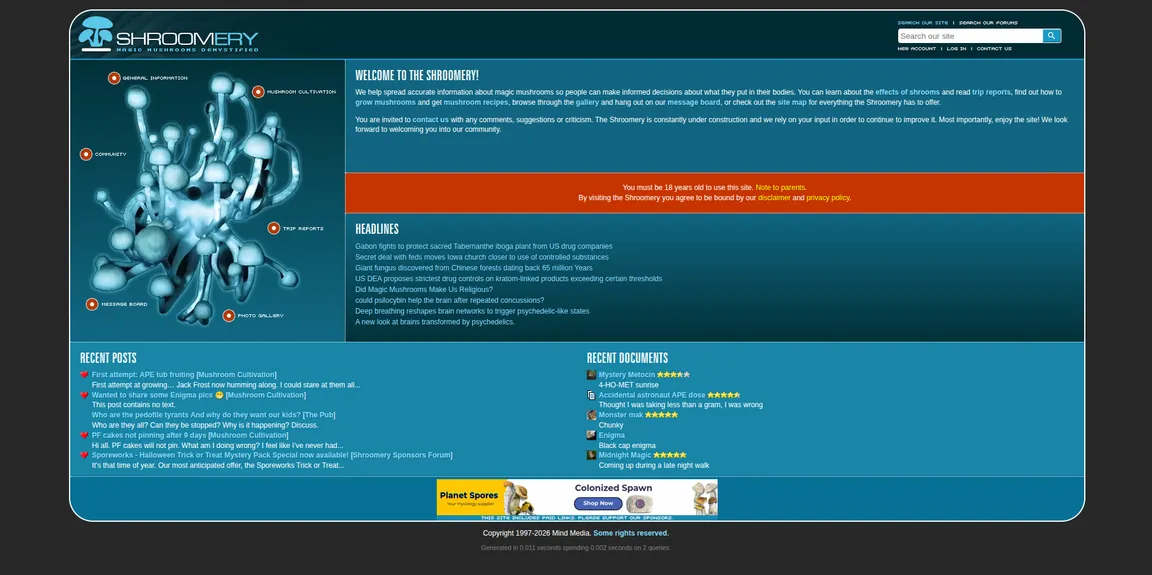
Shroomery.org is one of the largest online communities for people who love learning about, hunting, and growing mushrooms. The site holds decades of helpful advice written by expert users. However, the website uses a very old message board layout, which makes it hard for new users to find information.
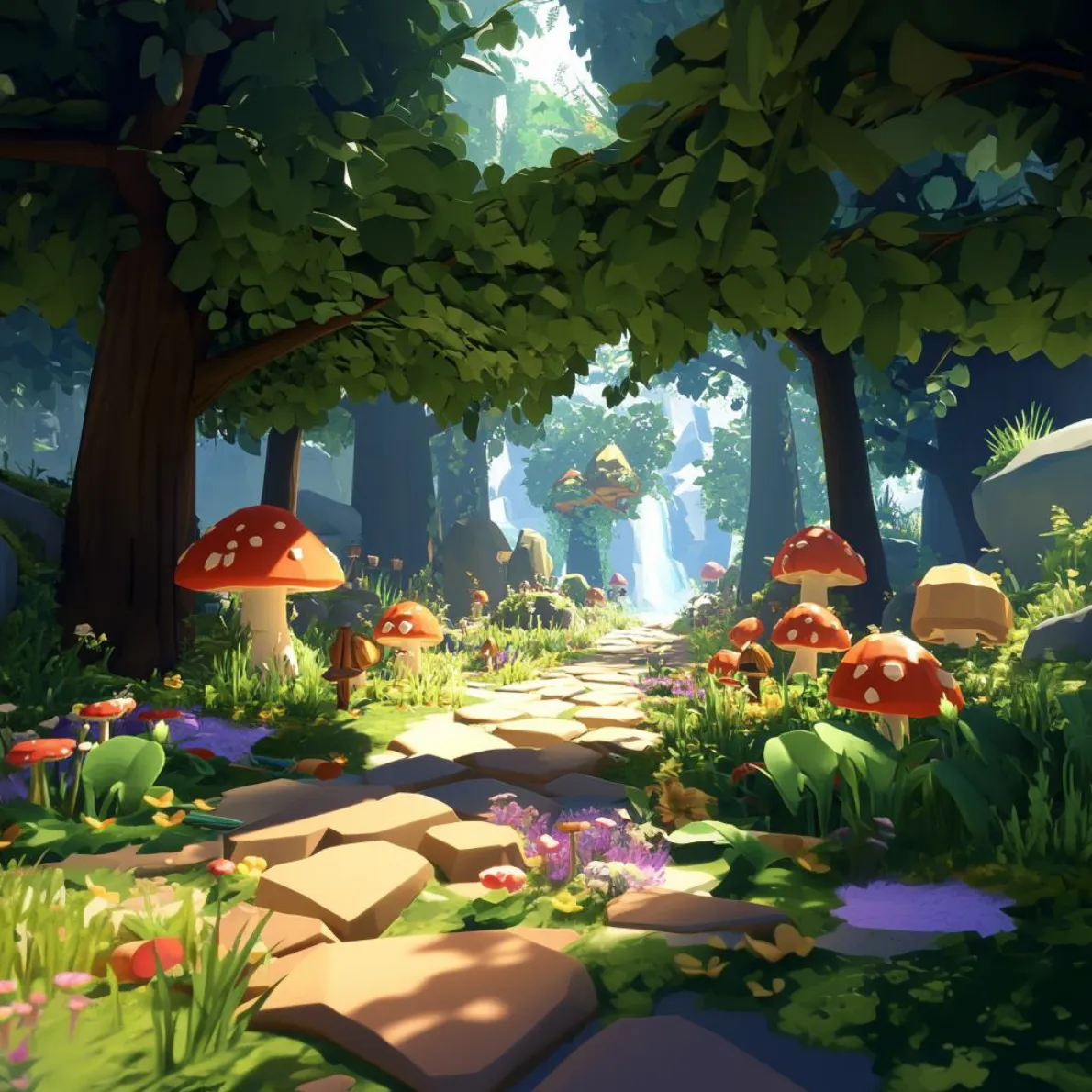
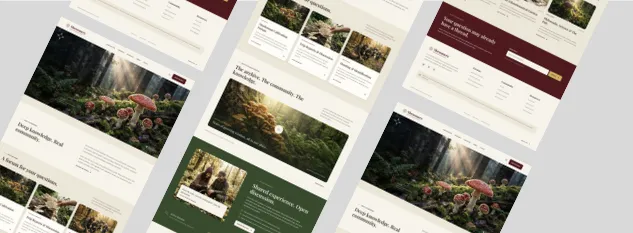
House of Giants was hired to create a fresh vision for the homepage and discovery experience. Instead of building a plain, boring website, we pitched a game-like world where users explore biomes, walk through 3D spaces, and learn by playing.
The Problem: Most Websites Are Built to Rush You Away
Modern websites are usually built to get you in and out as fast as possible. They use simple search bars, clean cards, and instant answers. But real-world mycology—learning how to forage, identify, and grow mushrooms—requires patience, careful observation, and practice.
Shroomery’s existing platform had a unique challenge. The website was powered by old forum software. Even though the community was extremely active, the way the site was organized created big roadblocks for new users:
Dense Walls of Text: Decades of expert knowledge, field guides, and cultivation tips were buried inside thousands of long message threads.
The Intimidation Factor: Without a clear starting point, beginners had to wade through confusing jargon and scientific terms. It was easy for newcomers to feel overwhelmed, lost, or even scared away before they could get involved.
Passive Browsing: The legacy message board relied entirely on manual searching. It treated learning like searching through an old digital filing cabinet, taking away the real-world excitement of discovering mushrooms in nature.

Shroomery needed a way to make their massive library of community knowledge feel welcoming, interactive, and exciting for a new generation of hobbyists—without losing the depth that veteran members loved.
Strategic Methodology: “Anti-UX” & Play-Based Discovery
Instead of standard SaaS layouts (rounded cards, flat grids, rapid navigation), we introduced deliberate, exploratory friction through spatial navigation formats and play-based interactive architecture.
The Science Behind Why This Works
We used proven ideas from psychology and learning science to back up our design choices:
Productive Struggle: Research on how memory works by Robert Bjork shows that when learning takes a little extra effort, people remember the information much better. Adding exploration steps helps users actually remember mushroom types instead of skimming past them.
Brain Load Management: Based on John Sweller’s Cognitive Load Theory, human minds get stressed when looking at walls of text. By breaking the forums into small visual areas (like green houses and forests), information becomes easier to process.
Learning Through Play: Based on Seymour Papert’s learning theories, people learn best by doing. Replacing plain text boxes with 3D maps and game controls brings back the fun of hunting in nature.
Sparking Curiosity: According to George Loewenstein’s theory of curiosity, people get curious when they see a tiny piece of something hidden. A visual map with hidden paths makes users want to click around to see what is next.
Technical & Conceptual Formats Proposed
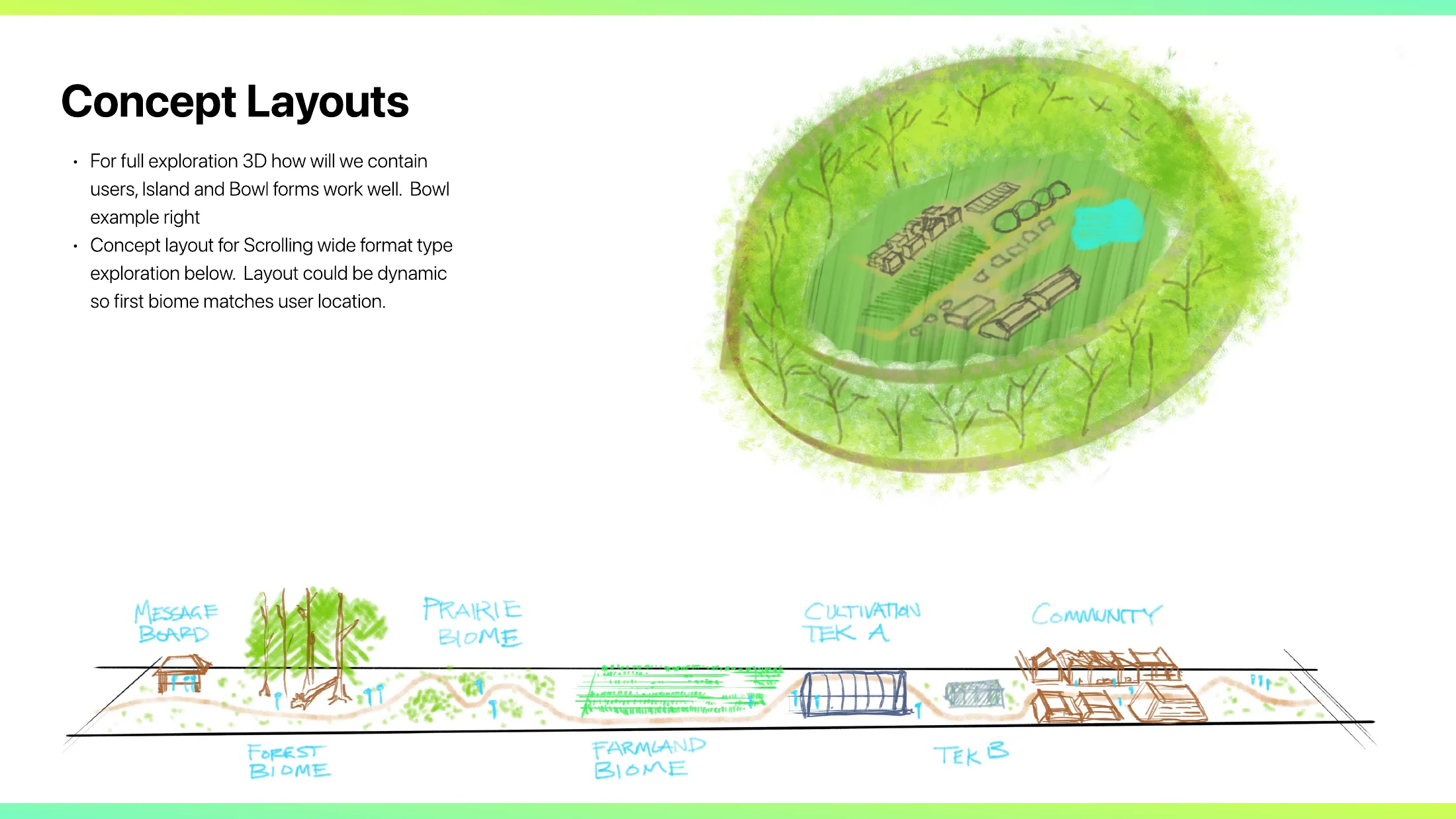
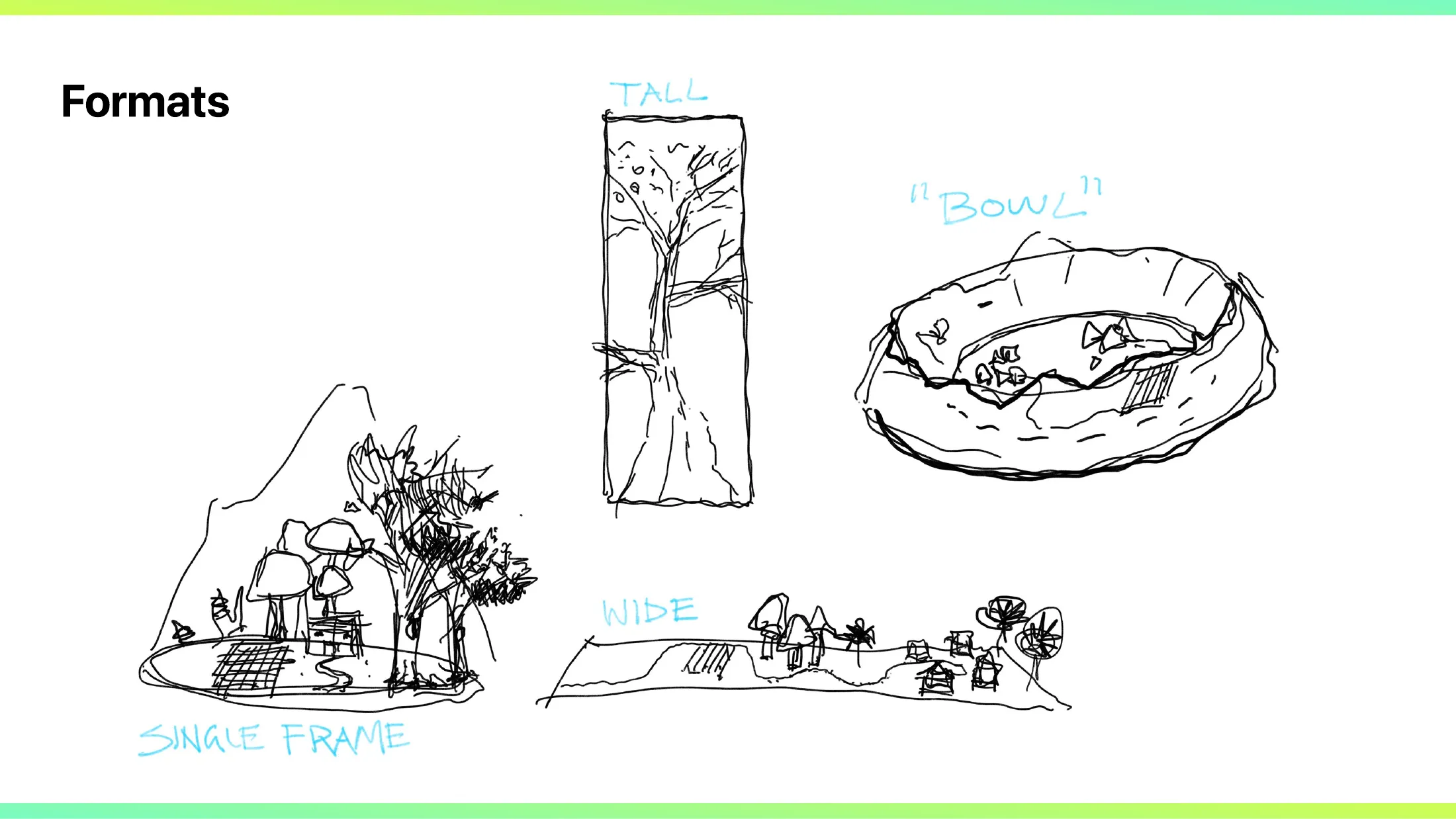
To bring play-based discovery to life, we designed three core spatial formats to replace standard web pages:
Scroll Journey (2D/3D Hybrid)
Users scroll through continuous 2D artwork or fly-through 3D environments. Forum categories are rendered as physical hotspots along a path—like visiting forests for foraging guides, greenhouses for cultivation tips, or village buildings for chat forums.
The 3D Diorama (3 DOF)
A self-contained, 360-degree rotating island or “bowl” scene that users can click and spin. It uses lighting shifts, weather effects, and interactive hotspots to keep exploration fun and contained.
Fully Walkable World (6 DOF)
A video-game-style experience where users move a character through a 3D landscape using WASD or arrow key controls. Users walk up to buildings, labs, or biomes to unlock discussions and tutorials.
Spatial Mapping: Translating Forums into Environments
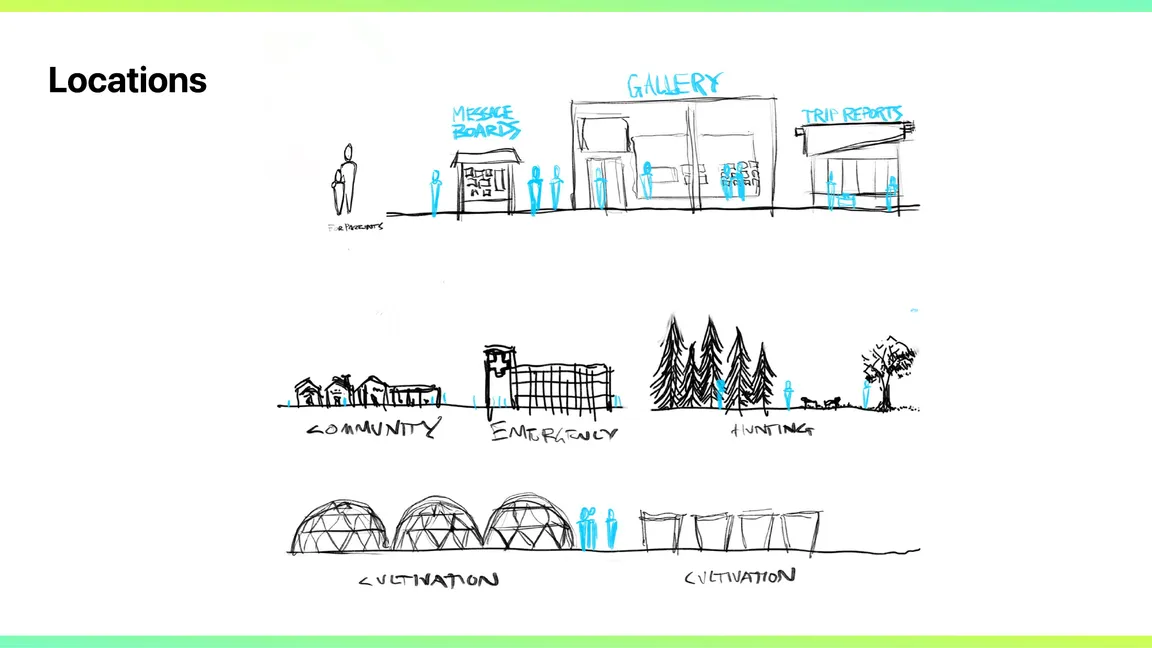
For this phase, we took a non-traditional approach. While most legacy websites map navigation to standard category lists and tag clouds, our strategy mapped content directly to visual discovery areas.
To make navigation intuitive and play-based, legacy site URLs were mapped directly onto physical architectural metaphors:
The Results: An Experimental Three.js Game & Smart Content Map
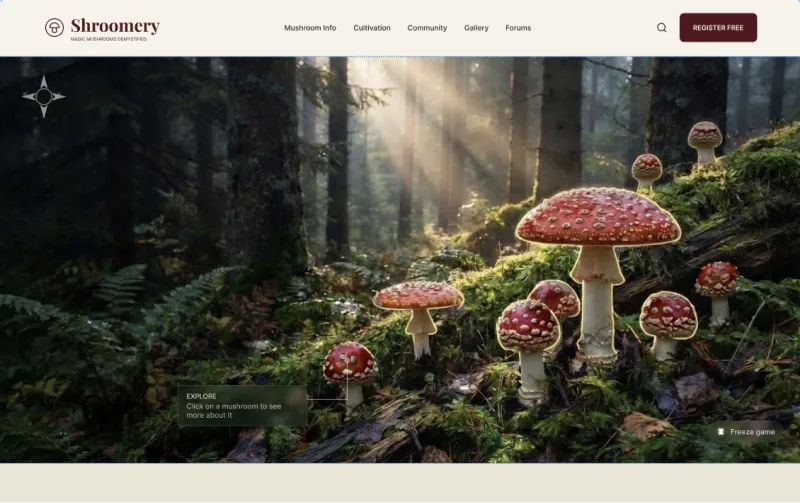
To bring this vision into reality, our team built an experimental interactive web prototype powered by Three.js—a high-performance 3D JavaScript library that runs directly inside web browsers without needing extra plugins or downloads. This allowed us to transform Shroomery’s static message board architecture into a living, interactive environment that felt like a video game while remaining light, fast, and accessible on modern web browsers.
Rather than forcing users to memorize complex forum categories or scroll through endless lists of text, we introduced a visual content map that bridged the gap between game design and practical web utility. This spatial mapping system gave users an intuitive bird’s-eye view of the entire platform, making it much easier to navigate directly to high-value guides, foraging biomes, and cultivation tutorials.
Faster Content Navigation: Instead of digging through deep, legacy text threads, the visual content map allowed users to quickly find and jump to key topics, guides, and biomes in just a few clicks.
Real-Time Activity Highlights: Users could instantly see where community activity was happening live across the site, making popular discussions and active foraging threads easy to spot right on the map.
Playful 3D Exploration: The Three.js prototype proved that a 20-year-old message board could be reimagined as an engaging, playable 3D world without losing the deep community knowledge that veteran members relied on.
Services Rendered
Research and Strategy
- Community & Platform Capability Analysis: Evaluating legacy message board architectures and high-density community forums.
- Non-Traditional UX & "Anti-UX" Methodology: Formulating spatial navigation and play-based discovery models.
- Learning Psychology & Cognitive Strategy: Applying Desirable Difficulty and Cognitive Load frameworks to user flows.
- Spatial Content Mapping: Translating legacy URLs, message categories, and TEK databases into physical architectural metaphors.
Design and Creation
- Spatial Layout & Format Concepting: Designing 2D/3D Scroll Journeys, 3 DOF Dioramas, and 6 DOF video-game-style worlds.
- Concept Sketching & Architectural Diagrams: Mapping biomes, greenhouses, town halls, and information kiosks.
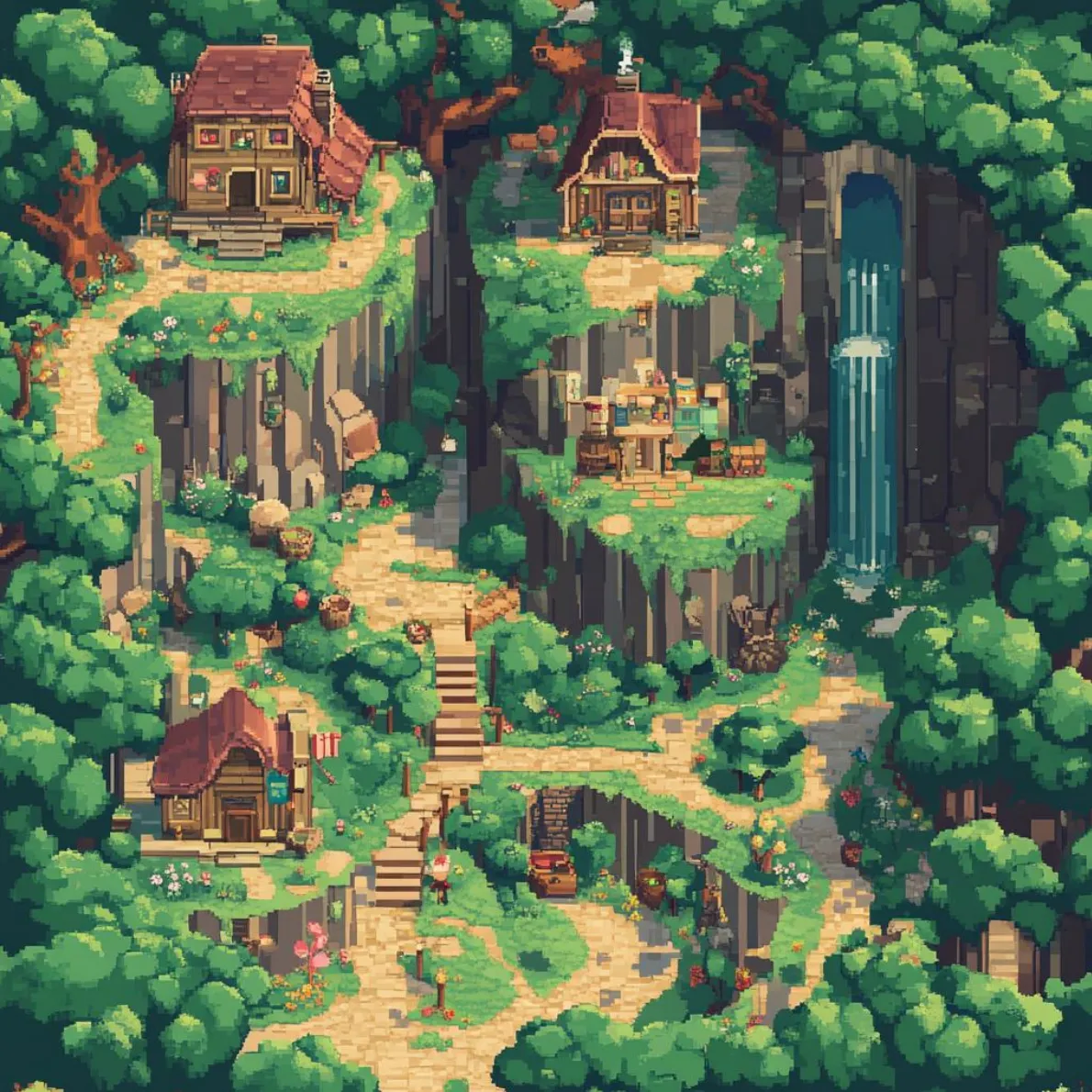
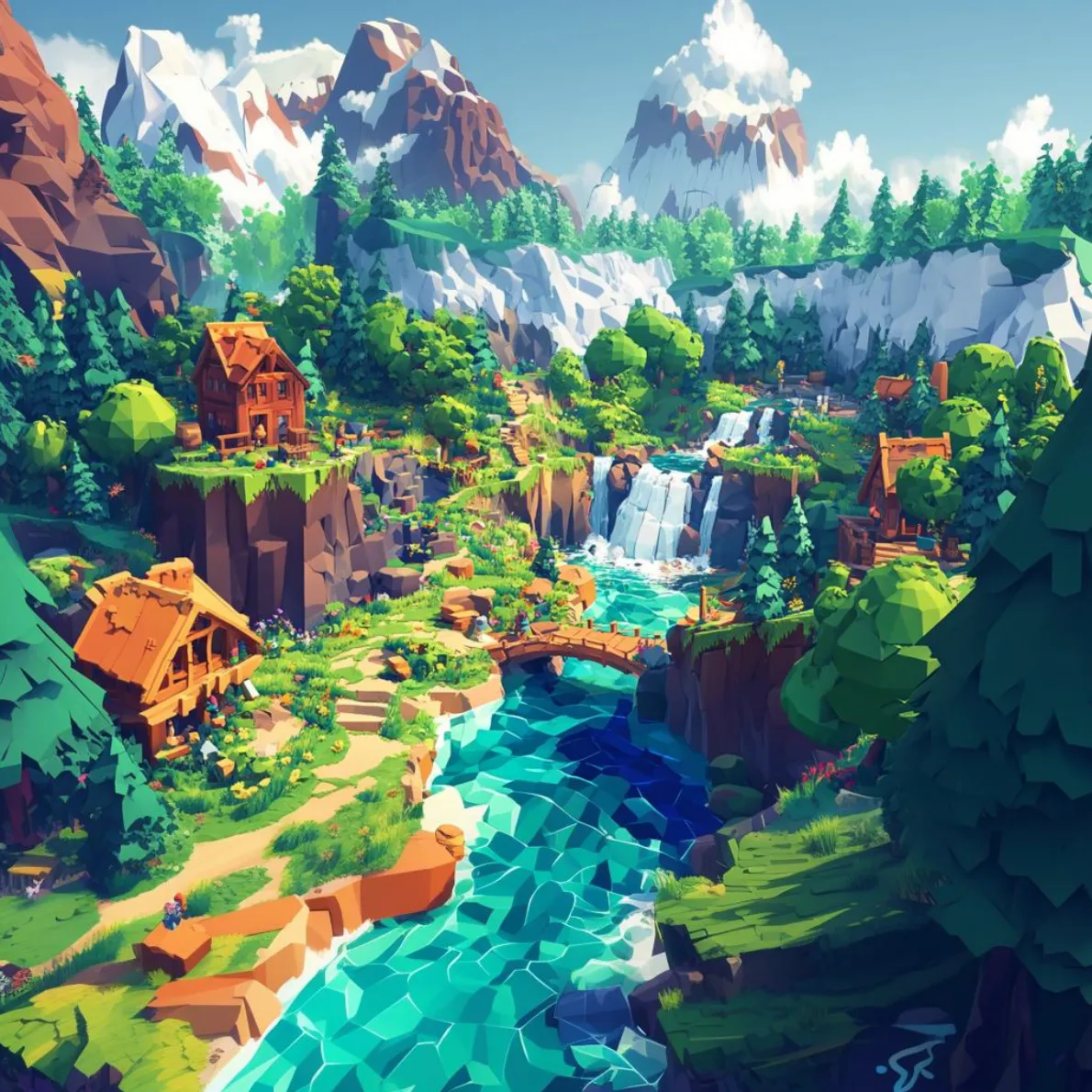
- Visual Style Explorations: Creating aesthetic directions across 2D pixel art, low-poly 3D, and "Deep Dream" artistic styles.
- Interactive UI Component Design: Designing spatial hotspots, action controls, and real-time activity indicators.
Software Development & Prototyping
- Interactive 3D Web Engine Development: Engineering browser-native 3D prototypes using Three.js.
- Spatial Navigation & WASD Controls: Implementing video-game-style character movement and camera fly-through controls.
- Real-Time Activity Mapping: Integrating dynamic spatial overlays to highlight active discussions across biomes.
- Front-End Performance Optimization: Ensuring 3D scenes render smoothly across modern desktop and mobile browsers.
Project Management & Support
- Agile Milestone & Pitch Strategy: Structuring concept deliverables, interactive decks, and interactive prototypes for stakeholder review.