
Case Study
Revolutionizing Dog-Human Communication in the Pet Training Industry
Challenge
The core question driving this project was:
“How do you translate from dog to human faster?”
Or put simply,
“How do you get dogs to ‘speak’ human?”
This required a deep understanding of both dog behavior and human interaction, along with an innovative approach to product design.
Revolutionizing Dog Training
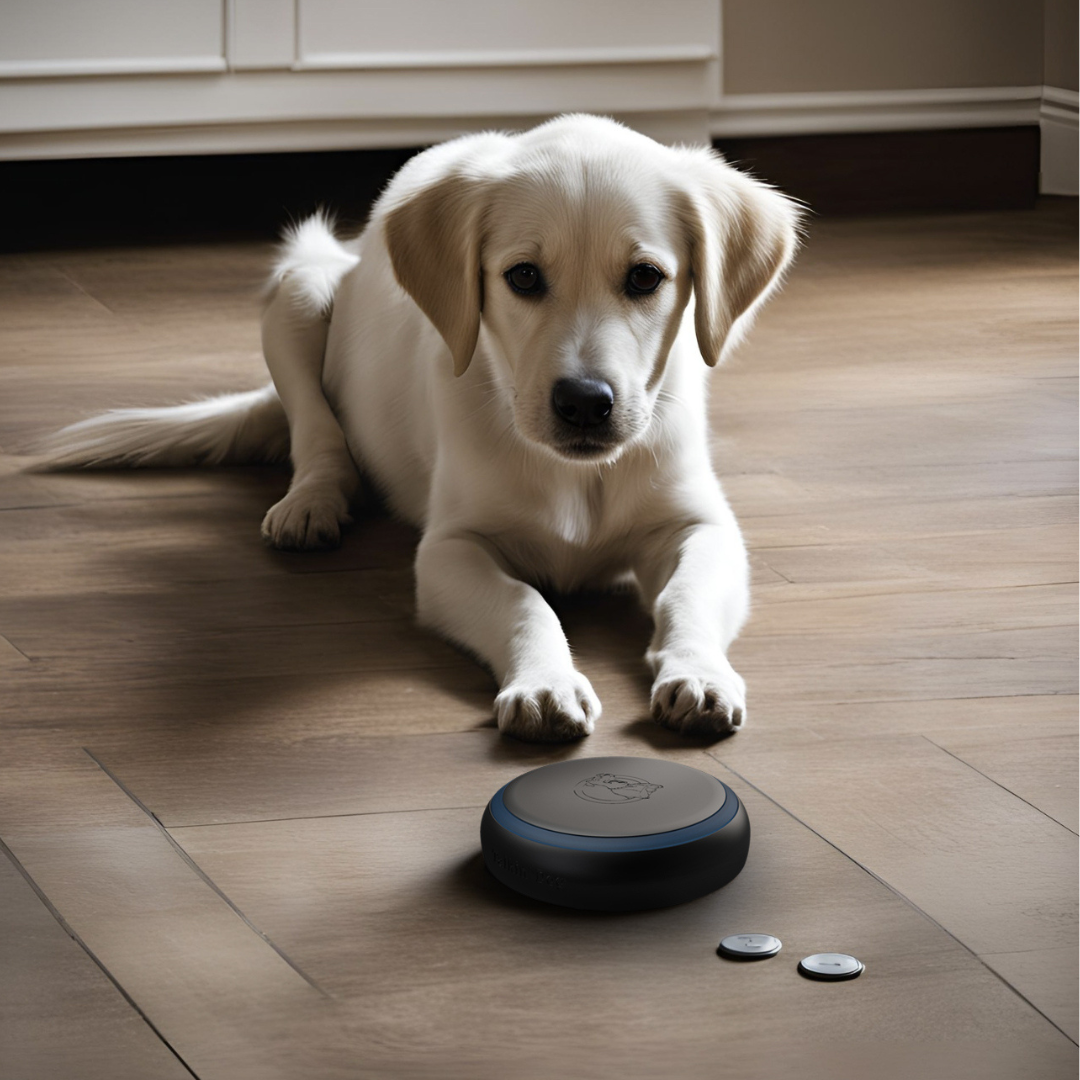
The pet industry, particularly in training devices, is saturated with countless products aimed at pets. However, an unprecedented opportunity arose when the renowned #DogWhisperer of California was inspired to instantly call us after seeing a Staples Easy Button in action demonstrated by a fellow trainer. This sparked his vision to revolutionize dog training by shifting the focus from training pets alone to educating their human owners.
His philosophy centers on the belief that owning a pet is fundamentally about managing a relationship — and communication is the key. Given that dogs understand roughly 30 human words, the challenge was to bridge the communication gap more effectively, allowing humans to anticipate their dogs’ needs and prevent relationship strain before it occurs.
Recognizing that consistent communication is vital, the device was designed not only to support pet-owner interaction during moments when the owner is absent but also to help maintain consistent cues and signals within the household. This consistency helps prevent confusion and misunderstandings that often arise when different family members interact with the dog in varying ways, ultimately fostering stronger, healthier relationships.
Services Rendered
Research and Development
User interviews (ie. comprehensive personas)
Process mapping (ie. end to end user journeys)
User-driven product requirements
Competitor product analysis
Design and Creation
Prototyping Software (low fidelity) (eg. Balsamiq)
Hand-drawn industrial designs
Photoshop renderings (ie. customer feedback)
Solidworks with PLM (ie. Complete rendering and creation)
Software Development
Platform Architecture (eg. AWS loT)
Application Development (eg. React, Python, Cognito)
Embedded Linux (eg. device operation)
Automated Testing and Build (eg. Github Actions)
Project Management
Modified Agile Hardware Design (MAHD)
JIRA CMMI for internal work tracking
Harvest Integration for project budgeting and oversight
Research & Discovery
Bringing a comprehensive understanding of the whiskey aging method, the technological challenges posed, the chemists' vision, and a shared love for whiskey, Landi was able to align its efforts with the heart of the chemists' innovation. Landi worked alongside the chemists to understand the innovative brewing method, the challenges in productizing it, and their vision for the final product. The collaboration bridged the gap between innovation and practical implementation, allowing fluid communication, even with the distance between the individuals, with regular weekly updates to the chemists that included videos, photos, and reports on the project's progress, allowing their marketing team to stay in pace with development.
To inform our design process, we reviewed numerous peer-reviewed studies exploring methods for interpreting canine vocalizations to enhance human-dog communication. This research explored methods for interpreting canine vocalizations to enhance human-dog communication. Key insights from the study included:
Vocalization Analysis: The study analyzed various canine vocalizations to identify patterns and meanings, providing a foundation for understanding how dogs communicate their needs.
Human Interpretation: It examined how humans perceive and respond to these vocalizations, highlighting the challenges and potential for miscommunication.
Technological Integration: The research suggested integrating technology to bridge the communication gap, aligning with our goal to develop a device that translates canine signals into human-understandable messages.
Building upon these findings, we collaborated with dog parents and professional trainers to analyze existing pet technologies, pinpointing where communication often broke down. This collaborative approach ensured that our design was grounded in real-world experiences and scientific research.
Design & Development
Before finalizing our designs, we conducted extensive market research to understand how interactions were occurring with similar—but not directly competing—devices. This included studying wear patterns and materials used in existing pet tech, which dramatically influenced our approach.
Material safety was a top priority throughout the design process. We ensured compliance with regulations such as the CPSIA and California Proposition 65, which limit hazardous substances like lead and BPA in consumer products, including pet items. To meet these standards, we prioritized the use of non-toxic, eco-friendly materials such as bamboo composites and recycled plastics. Third-party testing was conducted to verify compliance and provide additional assurance to users.
We also incorporated sustainability into our material sourcing, seeking certifications like OEKO-TEX, FSC, and GOTS to demonstrate responsible and ethical sourcing practices. This not only aligned with consumer demand for greener products but also reinforced our commitment to environmental stewardship.
Given the active nature of dogs interacting with the device, material durability and functionality were critical. We selected materials that were not only non-toxic and easy to clean but also highly resistant to scratching and wear. Rigorous durability testing and quality control inspections ensured the device could withstand frequent use without compromising safety or performance.
Beyond durability, we closely observed how dogs physically interacted with the device, considering how the product might affect their paw pads and nails. This insight informed ergonomic refinements that prioritized comfort and safety.
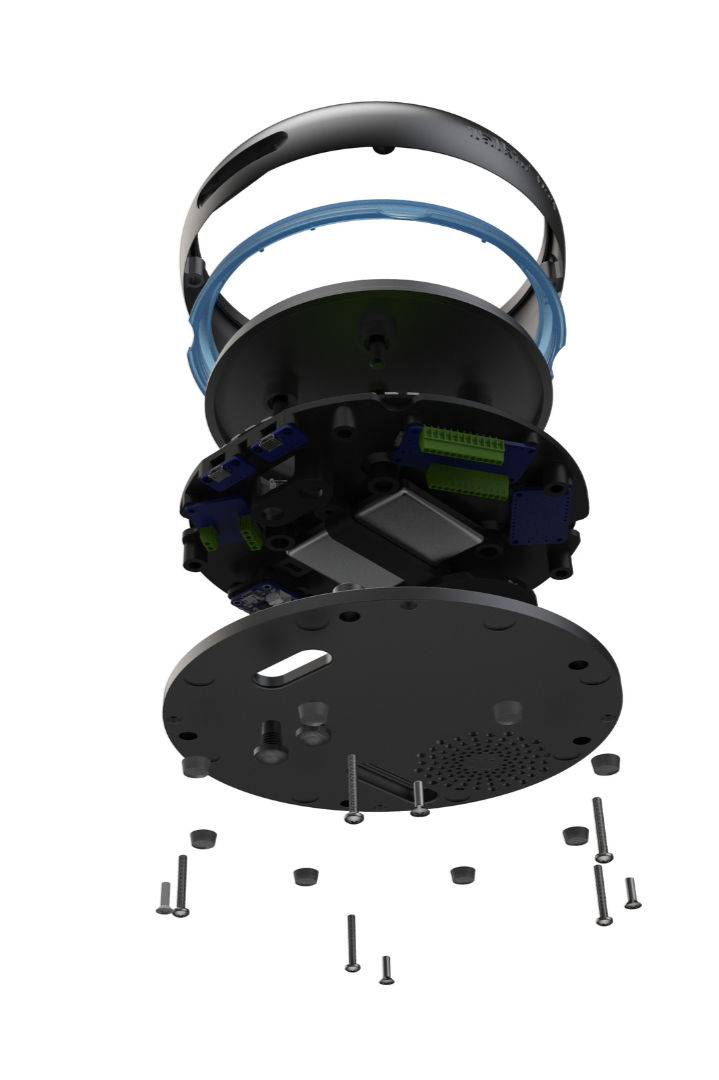
We incorporated a deeper ingress protection (IP) rating to address challenges posed by dogs’ frequent use of their snoots on the device. Drool and grime buildup necessitated a “sink-safe” design that could be easily cleaned, especially around sensitive areas like charging and firmware upload ports.
Dog saliva contains multiple proteins that can trigger allergic reactions in humans. In fact, dog saliva has more protein types than their skin, potentially causing more allergies than dander. These proteins can become airborne when dried, posing a risk to individuals sensitive to them. Therefore, our design had to consider not only the durability and functionality of the device but also the potential health implications for users.
Technologically, the device was built within a microprocessor environment enabling fast responsiveness and off-the-shelf (OTS) integration with cloud-based platforms. This architecture facilitated rapid development and seamless connectivity with smart home devices such as Amazon Echo, alongside cellular text messaging for remote notifications.
Rapid, iterative prototyping with cardboard models allowed us to observe real-world dog interactions, informing critical design decisions and material choices. These hands-on tests ensured the final product was durable, safe, and perfectly suited to enhancing dog-human communication.
The Result
Final Product Features
Interactive Application: Designed to be intuitive and effective, this app paired with the device facilitates seamless communication.
Voice Notifications: When owners are home, Bluetooth or in-device speakers announce a dog’s intent using natural, human-like phrases voiced by a realistic actor (e.g., “Let me out,” “I’m out of water”).
Remote Alerts: For times when owners are away, a discreet “outside” mode sends quiet text notifications, updating owners without disrupting the dog’s environment.