
Case Study
Designing a Quick-Clip Wearable Emergency Charger for Outdoor Enthusiasts
Challenge
Before the surge in emergency “one-time use” charging batteries and larger portable power banks, our team was tasked with creating a go-to charging solution tailored specifically for the emerging wireless charging market, focusing on outdoor living enthusiasts.
The key challenge was to develop a reliable, compact power source that could deliver enough emergency charge in critical moments when a phone is dead or dying—especially in demanding outdoor environments. The device needed to withstand the harsh realities faced by outdoor enthusiasts, including exposure to wet conditions, temperature extremes, dust, and physical impact.
Because users might be hiking, mountaineering, or scaling big walls over several days, the charger had to be durable, water-resistant, and operable in both cold alpine climates and hot, sunny conditions. It also needed to integrate seamlessly with existing gear without adding excessive weight or bulk, ensuring it wouldn’t hinder mobility or safety.
Finding a balance between ruggedness, usability, and effective emergency power delivery was crucial for meeting the needs of outdoor adventurers who depend on their devices for navigation, communication, and safety.
Services Rendered
Research and Development
User interviews (ie. comprehensive personas)
Process mapping (ie. end to end user journeys)
User-driven product requirements
Competitor product analysis
Design and Creation
Prototyping Software (low fidelity) (eg. Balsamiq)
Hand-drawn industrial designs
Photoshop renderings (ie. customer feedback)
Solidworks with PLM (ie. Complete rendering and creation)
Project Management
Modified Agile Hardware Design (MAHD)
JIRA CMMI for internal work tracking
Harvest Integration for project budgeting and oversight
The Approach & Process
Leveraging Founder's Expertise and Network
Our founder, an avid outdoorsman and experienced rock climber and mountaineer, was pivotal in shaping the product vision. By tapping into his extensive network of climbers, hikers, and mountaineers, we gathered authentic insights into the needs and pain points of the modern outdoor enthusiast. This direct access helped us identify gaps in the market and define the essential features our device needed to address multi-day adventures, big wall climbs, and extended outdoor excursions.
User-Centered Design & Prototyping
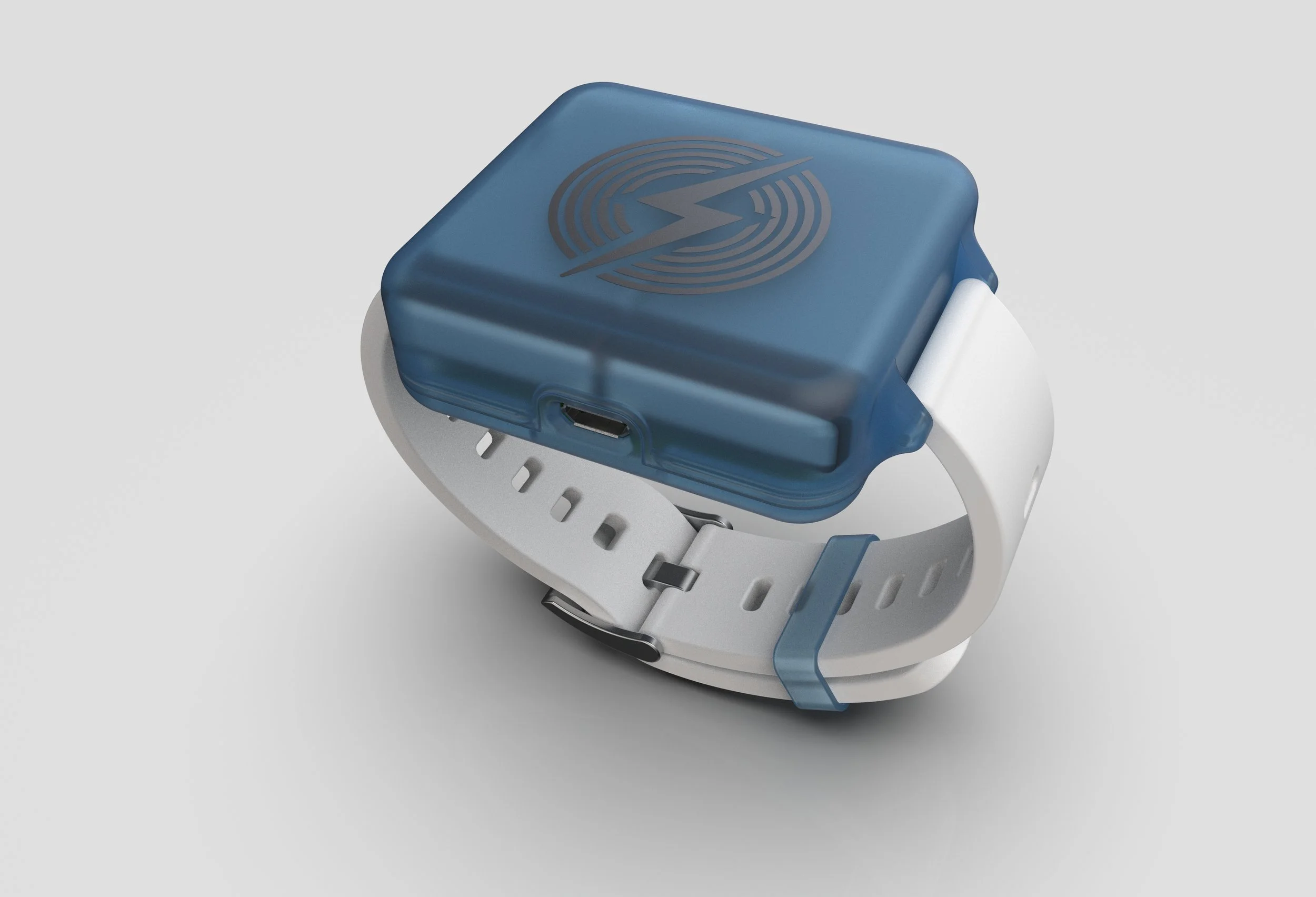
Size and weight were crucial factors in our design, but the biggest challenge was ensuring accessibility—the device had to be easy to attach and use quickly in urgent situations. Early concepts explored various attachment methods: belt clips inspired by Batman’s utility belt, large wrist-mounted units, and an “octopus” style wrap-around solution that encased the phone.
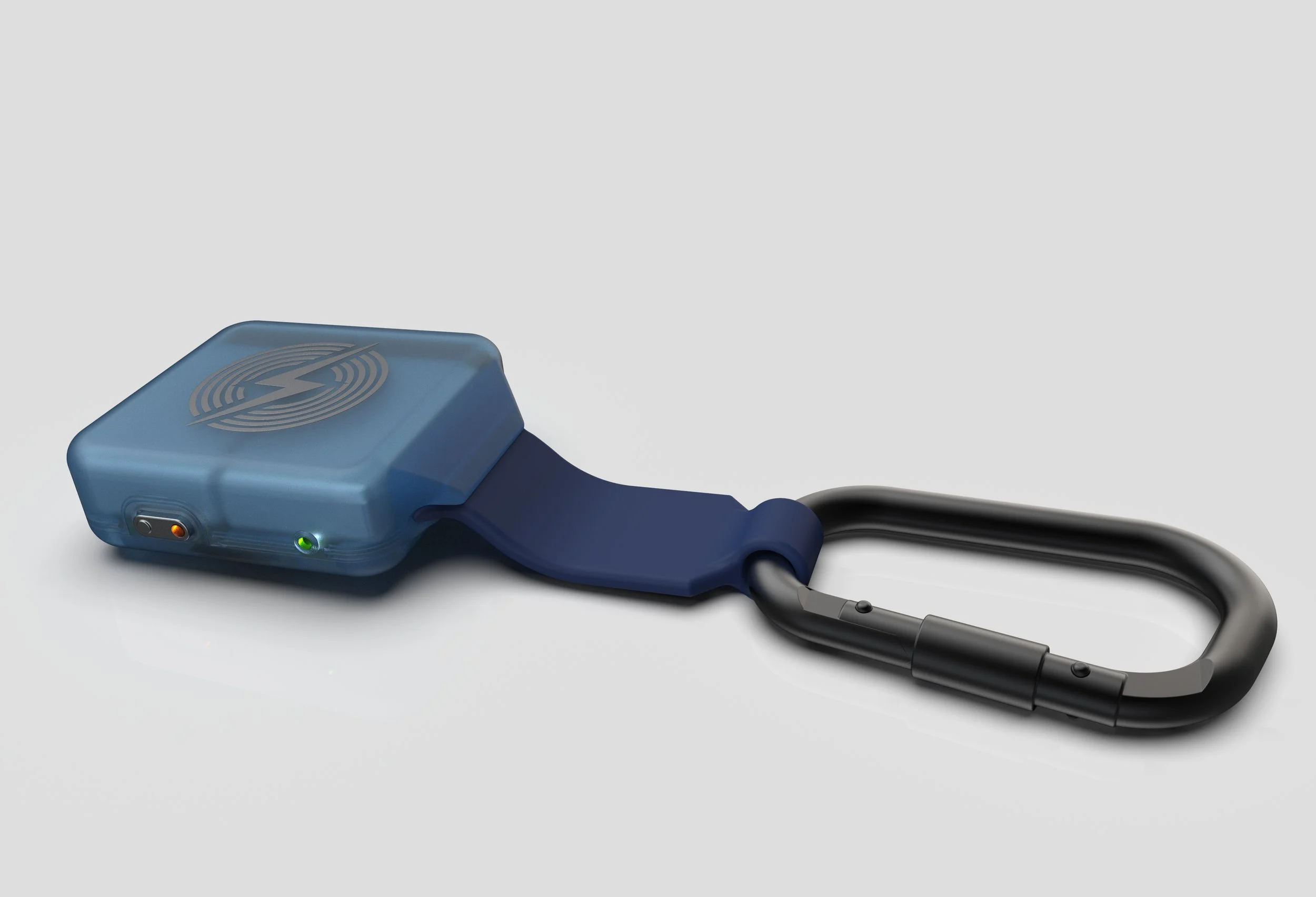
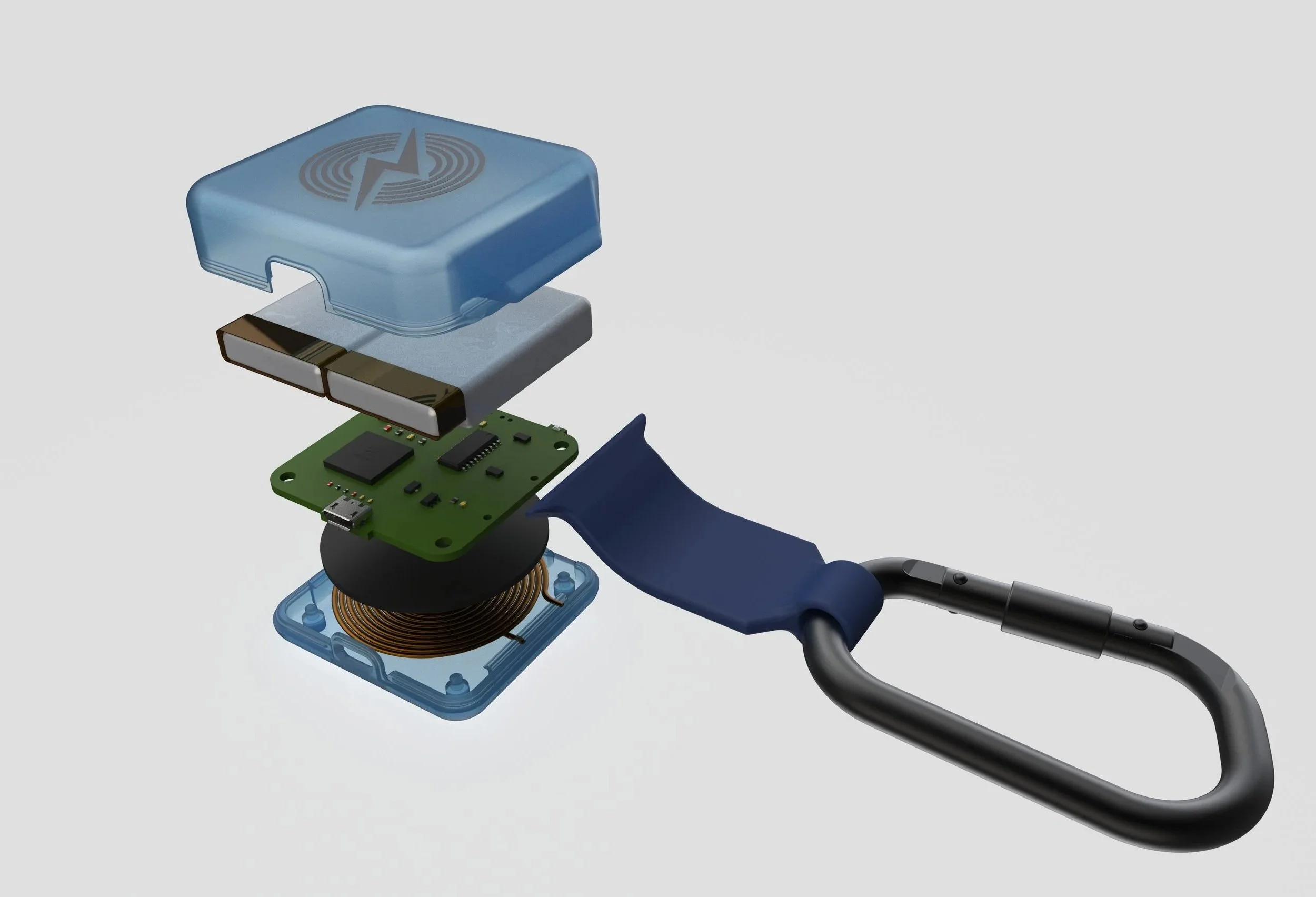
While innovative, many of these proved too bulky or restrictive for outdoor activities. After consulting several founders in the outdoor gear space for their expert feedback and collaborating closely with experienced big wall climbers who rigorously tested prototypes in the field, we landed on a “dog bone” attachment—similar to climbing quick draws—that securely fastens the device anywhere on the user’s gear while attaching firmly to the phone.
This simple yet effective method, especially when paired with MagSafe technology, delivered exceptional convenience and reliability. The device could be clipped on and accessed instantly, solving the critical problem of emergency charging accessibility without adding unnecessary bulk or complexity.
Commitment to Safety: UIAA Certification and Industry Standards
Understanding that safety and reliability are paramount for outdoor equipment, we aligned our design and manufacturing processes not only with the rigorous standards of the International Climbing and Mountaineering Federation (UIAA) but also with leading electrical and battery safety certifications.
The UIAA brings together independent experts who establish strict testing and certification protocols to ensure equipment performance under extreme conditions. This alignment guarantees that our device meets high durability and safety benchmarks, providing reassurance to professional users who depend on certified gear.
In addition to UIAA standards, our charger complies with key General Safety Standards for electronic charging devices, including:
UL 60950 (Information Technology Equipment): Outlines safety tests and benchmarks for phones and charging devices.
UL 1310 (Class 2 Power Units): Covers safety for low-voltage power supplies and battery chargers.
IEC 62368-1: Provides a framework to evaluate digital technology equipment safety by identifying hazards and focusing on risk mitigation.
Battery safety is equally critical, especially for portable chargers used in rugged environments. Our device adheres to:
UL 2054 (Household and Commercial Batteries): Focuses on reducing risks of fire or explosion in consumer product batteries.
UL 1642 (Lithium Cell): Ensures safety of lithium batteries under extreme conditions such as high temperatures and abusive handling.
By integrating these stringent standards into every stage of development, we deliver a product that is not only reliable and convenient but also meets the highest safety expectations for outdoor and consumer electronics.

The Result
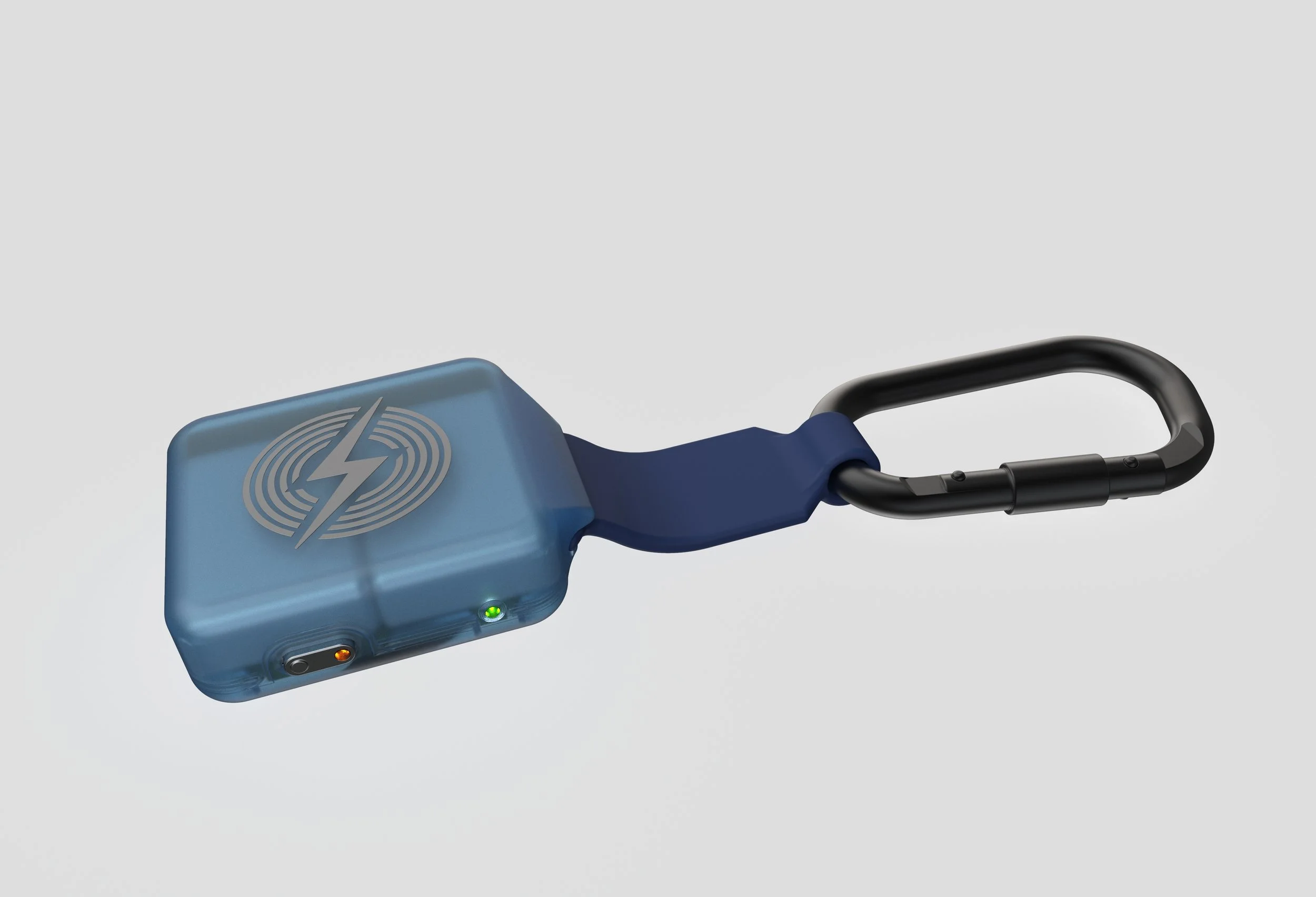
The outcome was a quick-clip wearable emergency rapid charging device, designed for convenience, reliability, and ease of use. Key design elements included a washable, submersible exterior capable of withstanding immersion in water, and a rugged construction built to absorb multiple hard impacts without compromising functionality. The optimized form factor integrated seamlessly with the rugged equipment climbers typically carry, ensuring durability and accessibility in the toughest outdoor conditions.